Is Your Holiday Sleep Ready? Fix It in 5 Simple Steps
Holiday sleep often breaks down quietly. Later meals, travel, social events, alcohol, and extra screen time can push your body out of rhythm—leaving you tired, wired, and relying on caffeine to get through the day.
A holiday sleep reset doesn’t require a perfect routine or skipping celebrations. You just need a few guardrails that protect your circadian rhythm while life gets busier.
In this guide, you’ll learn:
Why sleep quality drops during the holidays
Five practical steps to stabilize rest and energy
A simple 7-day holiday sleep reset you can start tonight
Protecting sleep helps sustain energy during busy seasons.
Why Holiday Sleep Breaks Down
Holiday sleep breaks down because light exposure, meal timing, and daily schedules shift all at once.
Common disruptions include:
Later dinners and alcohol
Inconsistent bed and wake times
Increased evening screen exposure
Travel and time-zone changes
Higher mental and social stimulation
Together, these changes disrupt your circadian rhythm, the internal clock that regulates sleep, hormones, and recovery. When that rhythm drifts, energy and mood follow.
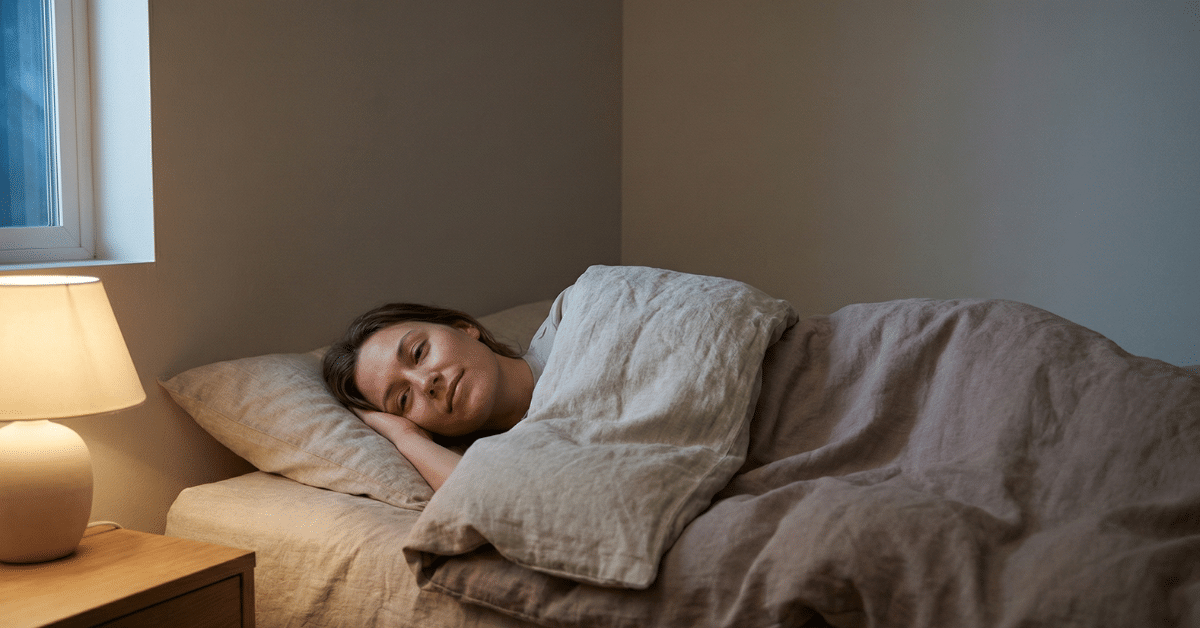
Late nights and stimulation disrupt circadian rhythm.
Your Holiday Sleep Reset: 5 Simple Steps
You don’t need a perfect routine—you just need consistency where it matters most.
Step 1: Anchor Your Wake-Up Time
If you do only one thing for better holiday sleep, fix your wake-up time.
Keeping a consistent wake-up time anchors your circadian rhythm—even if bedtime shifts occasionally.
Why it matters: A steady wake time helps regulate sleep pressure, hormone timing, and daytime alertness.
Try this today (2 minutes):
Choose a fixed wake-up time and stick to it
Get light exposure within 30 minutes of waking
For personalized timing, use theSleep Calculator to align with natural sleep cycles.
A steady wake time anchors your internal clock.
Step 2: Protect the First and Last Hour of Your Day
Your body responds strongly to light and stimulation cues.
Bright screens late at night can delay melatonin and push sleep later, while morning light helps reset your internal clock. This principle also supports long-term energy, as explained inHow to Create an Energy-Friendly Morning Routine.
Why it matters: Better light timing supports deeper sleep and steadier next-day energy.
Try this today (5 minutes):
Dim lights and screens 60 minutes before bed
Step outside briefly in the morning
Light timing shapes sleep quality and energy.
Step 3: Eat Earlier to Sleep Better
Late, heavy meals—especially when paired with alcohol—can raise body temperature and heart rate, making it harder to fall asleep.
Eating earlier doesn’t magically fix sleep, but it can make it easier to fall asleep and improve sleep quality. Food timing also plays a role in mood and recovery, as explored inUnderstanding Nutritional Psychiatry.
Why it matters: Earlier dinners reduce nighttime stimulation and digestive strain.
Try this today (simple shift):
Finish dinner at least 3 hours before bed
If you drink alcohol, keep it earlier and hydrate
Earlier dinners support deeper sleep.
Step 4: Use Wind-Down Cues, Not Willpower
Sleep responds better to predictable signals than discipline.
A simple wind-down ritual—repeated nightly—trains your nervous system to expect rest. If stress keeps your mind racing, techniques fromReset Your Nervous System can help lower evening arousal.
Why it matters: Consistent cues shorten sleep onset and improve relaxation.
Try this today (3 minutes):
Slow breathing with longer exhales
Gentle stretching or reading
Predictable cues help the body relax before sleep.
Step 5: Don’t Chase Perfection—Chase Consistency
Holiday sleep doesn’t need to be flawless. What matters most is returning to your baseline quickly after late nights.