Holiday Foods That Steal Your Energy (And What to Eat Instead)
Holiday energy rarely crashes all at once. A holiday foods energy crash usually builds quietly—meal by meal.
You wake up fine. Then comes a sugary breakfast, a festive snack, a heavy dinner, maybe a drink or two. By evening, you feel tired, foggy, irritable, or strangely wired but exhausted. That’s not a lack of discipline. It’s food-driven energy swings.
This article isn’t about cutting out holiday foods or eating perfectly. It’s about understanding which foods tend to steal your energy—and how to swap them in ways that support steadier mood, digestion, and focus.
You’ll learn:
Why certain holiday foods trigger energy crashes
The most common festive food traps
Simple, realistic swaps that work in real life
Some festive foods quietly drain your energy.
Holiday Foods Energy Crash: Why It Happens
Holiday meals often combine three things your body struggles to regulate at the same time:
High sugar
Refined carbohydrates
Alcohol
Together, they push blood sugar up quickly, amplify reward-driven cravings, and place extra stress on digestion. The result isn’t just sleepiness—it’s unstable energy, mood dips, and stronger cravings later.
Research consistently links blood sugar swings and digestive stress with changes in focus and emotional balance. If this connection is new to you, start withUnderstanding Nutritional Psychiatry.
Energy Thief #1: Sugary Holiday Breakfasts
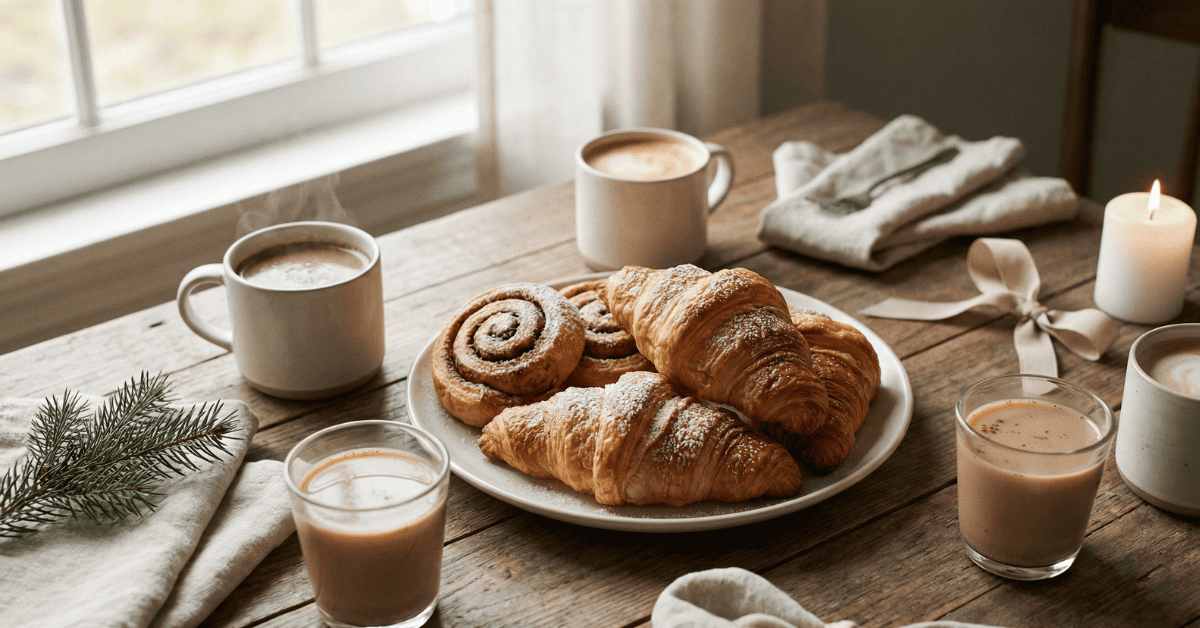
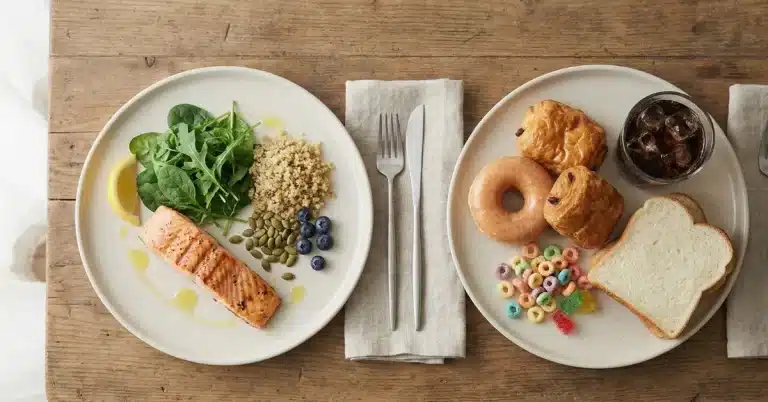
Pastries, pancakes, sweet cereals, and flavored coffee drinks start the day with a rapid blood sugar rise—followed by a crash a few hours later.
What happens: Energy spikes fast, insulin follows, and focus drops mid-morning.
Smarter swap:
Lead with protein and healthy fats (eggs, Greek yogurt, nut butter)
Keep sweetness as a side, not the foundation
Try this today: Build your breakfast around protein first, then add something sweet.
Sugary breakfasts often lead to mid-morning fatigue.
Energy Thief #2: The Afternoon Sugar + Coffee Combo
Cookies with coffee feel festive, but this pairing often creates jittery, unstable energy, especially for people sensitive to caffeine.
This pattern frequently shows up alongside mood dips and late-day fatigue, which we explore further inMood Food.
Smarter swap:
Eat a small savory snack before caffeine
Shift afternoon coffee to green tea or half-caff
Try this today: Never drink caffeine on an empty stomach after noon.
Sugar and caffeine can create unstable energy.
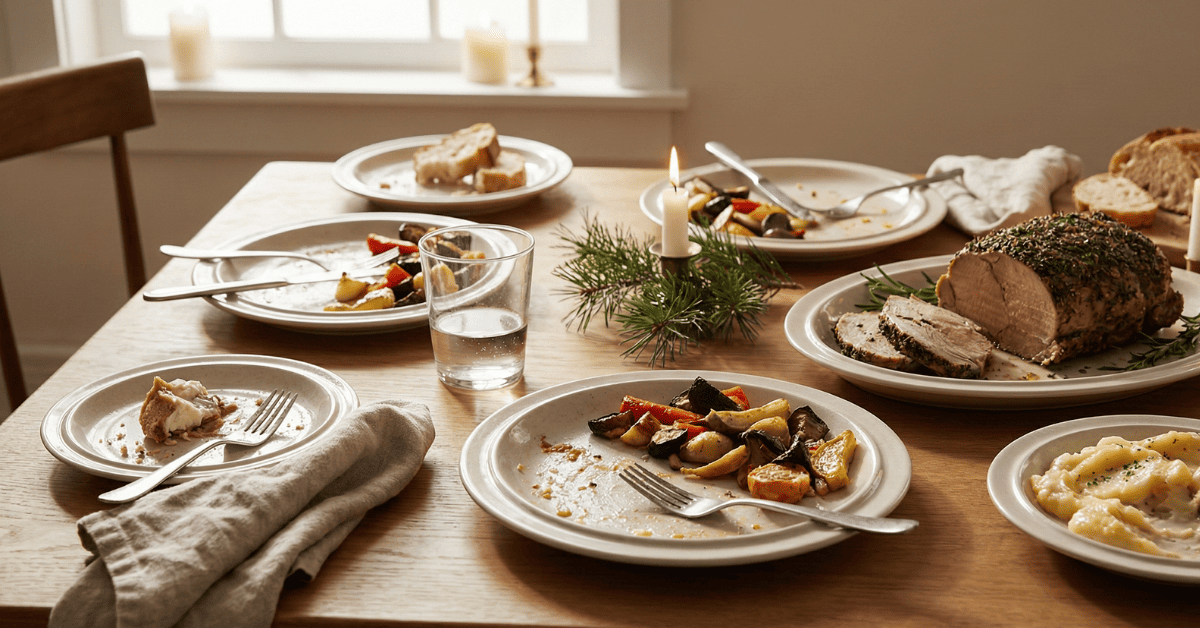
Energy Thief #3: Ultra-Heavy Holiday Dinners
Large, late dinners push your body into deep digestion mode, which can feel sedating and make focus harder.
What happens: Digestion ramps up, body temperature rises, and energy naturally dips.
Smarter swap:
Keep portions moderate
Prioritize protein and vegetables
Enjoy richer foods earlier in the day when possible
Food timing also affects overnight recovery, which connects closely with energy regulation discussed inIntermittent Fasting 101.
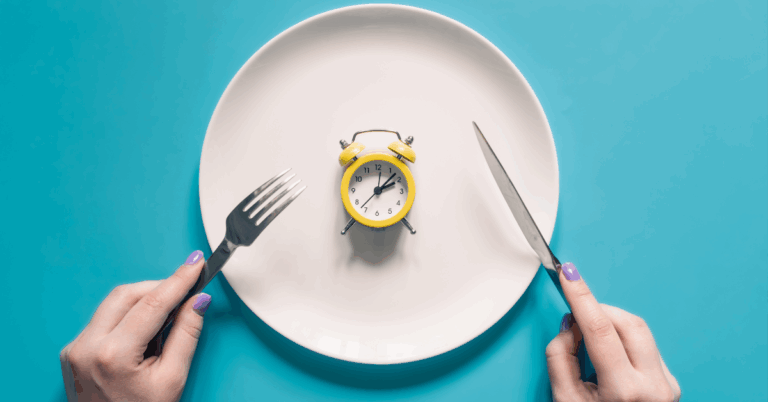
Try this today: Finish your largest meal at least 3 hours before bedtime.
Large dinners can leave you sluggish and unfocused.
Energy Thief #4: Alcohol as a Relaxation Tool
Alcohol may feel calming at first, but it often fragments sleep and worsens next-day fatigue.
What happens: Sleep becomes lighter later in the night, increasing brain fog and irritability the next day.
Smarter swap:
Drink earlier in the evening
Alternate each drink with water
Decide your limit before the event starts
If alcohol feels like a stress-management tool, calmer alternatives are outlined inReset Your Nervous System.
Try this today: Stop alcohol at least 3 hours before bed and hydrate well.
Alcohol may relax you—but often disrupts recovery.
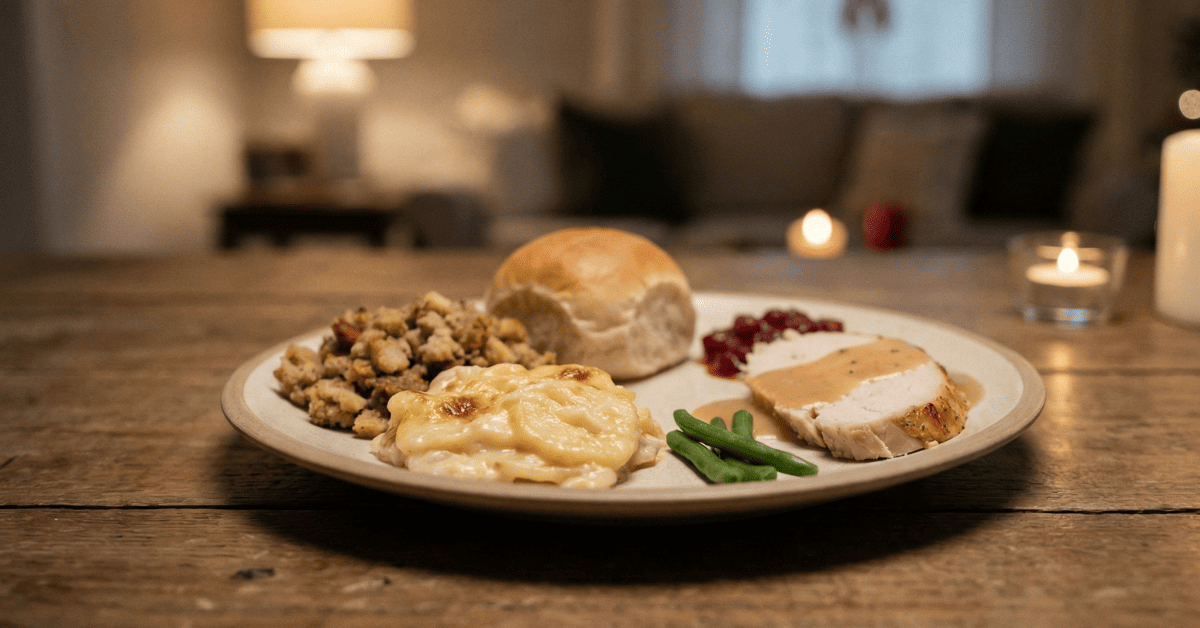
Energy Thief #5: Fiber-Free Holiday Plates
Holiday plates often lack fiber, the nutrient that helps stabilize blood sugar and support digestion.
Low fiber intake is commonly linked to energy dips and mood swings. For a deeper explanation, seeThe Fiber-Gut-Mood Connection.
Smarter swap:
Add one fiber-rich food per meal
Focus on vegetables, legumes, and whole grains
Try this today: Fill half your plate with plants before adding richer sides.
Low fiber meals destabilize energy and digestion.
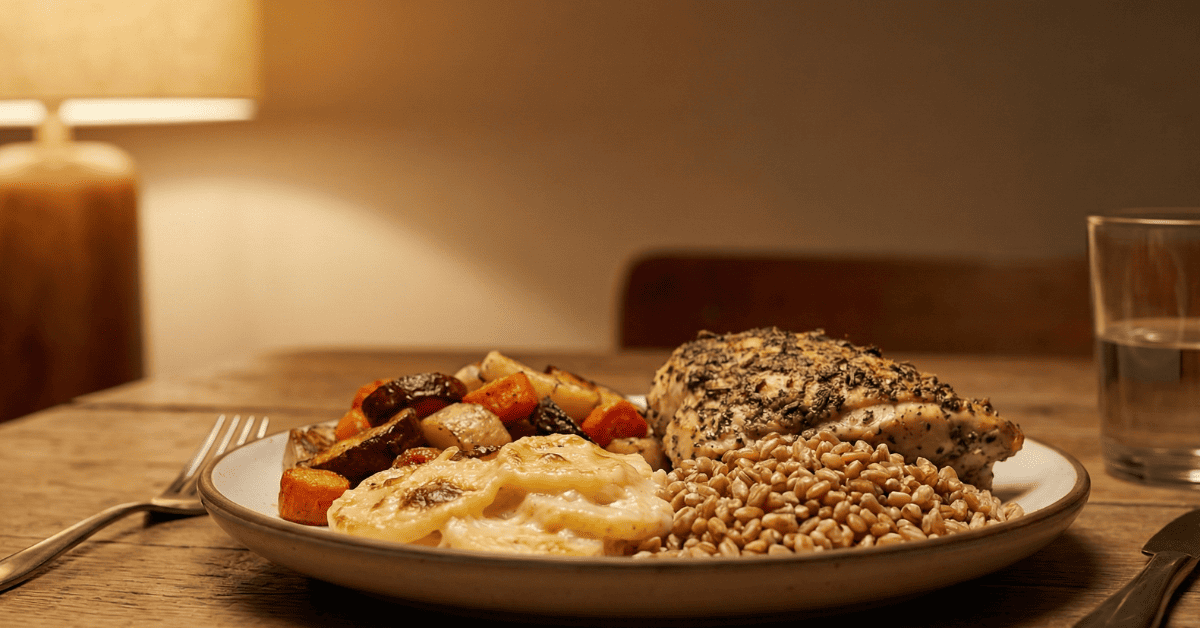
A Smarter Holiday Plate (Simple Visual Rule)
Instead of tracking calories or macros, use this structure:
½ plate: vegetables or fiber-rich foods
¼ plate: protein
¼ plate: festive or indulgent foods
If you’re at a buffet, build one anchor plate like this first—then decide if you want seconds.
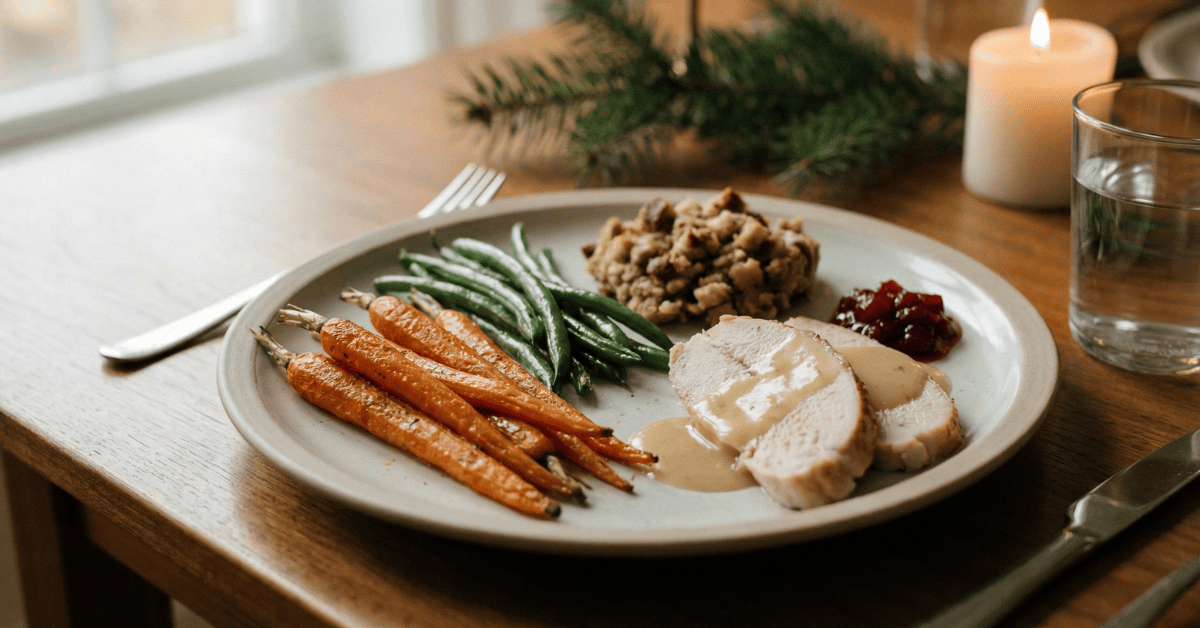
A balanced plate supports steady holiday energy.
The 5-Day Energy-Support Holiday Reset
Rather than changing everything at once, try this simple experiment:
Day 1: Add protein to breakfast
Day 2: Add fiber to one meal
Day 3: Eat dinner earlier
Day 4: Reduce alcohol or swap one drink
Day 5: Rate your energy (1–10) and note your best day
Small adjustments often deliver outsized results.
Quick FAQ: Holiday Foods and Energy
Why do holiday foods make me sleepy? Large meals, sugar spikes, and alcohol all increase digestive demand and disrupt energy regulation.
Is sugar or carbs the main problem? It’s usually the combination of refined carbs, sugar, and low fiber.
What should I eat before a holiday party? A small protein + fiber snack (like yogurt with berries or hummus with veggies).
Does alcohol really hurt sleep even if I fall asleep faster? Yes—sleep often becomes lighter later in the night.
Holiday foods don’t have to drain your energy. With a few smarter swaps, you can enjoy festive meals while supporting steady energy, calmer mood, and better digestion.
Start with one change—not a full overhaul.
“Energy isn’t about restriction—it’s about balance.”