How to calm anxiety fast without medication is one of the most searched questions during moments of emotional overwhelm—and for good reason.
When anxiety hits, it doesn’t feel abstract. Your heart races, your chest tightens, your thoughts spiral, and your body reacts as if something is urgently wrong. In those moments, advice like “just relax” or “think positive” feels useless.
However, fast relief is possible—not by forcing calm, but by helping your nervous system shift out of survival mode.
This article focuses on what actually helps in the moment, using practical techniques that work with your body instead of against it.
You’ll learn:
- Why anxiety escalates so quickly
- What helps calm anxiety fast
- Simple tools you can use anywhere, without medication
- How to prevent anxiety from returning as intensely
Why Anxiety Feels So Intense in the Moment
Anxiety is not a flaw or weakness. It’s a protective response.
When your brain perceives threat—real or imagined—it activates the sympathetic nervous system. As a result:
- Heart rate increases
- Breathing becomes shallow
- Muscles tense
- Attention narrows
This response is designed for short-term danger. However, when it stays active, the body struggles to return to baseline.
Understanding this is important, because anxiety doesn’t calm through logic—it calms through signals of safety.
What Makes Anxiety Spiral Instead of Pass
Several factors can intensify anxiety:
- Fighting the sensation (“Why won’t this stop?”)
- Shallow or rapid breathing
- Excess stimulation (screens, noise, crowds)
- Blood sugar drops
- Mental catastrophizing
Fortunately, each of these has a corresponding calming strategy.
How to Calm Anxiety Fast Without Medication
The techniques below are designed for acute anxiety—moments when you need relief quickly.
You don’t need to do all of them. Choose one or two that feel accessible.
1. Extended Exhale Breathing (Fastest Reset)
Breathing is the most direct way to influence your nervous system.
How to do it:
- Inhale through your nose for 4 seconds
- Exhale slowly through your mouth for 6–8 seconds
- Repeat for 2–4 minutes
Why it works: Longer exhales activate the parasympathetic nervous system, signaling safety.
If breathing feels difficult, start with shorter exhales and gradually extend them.
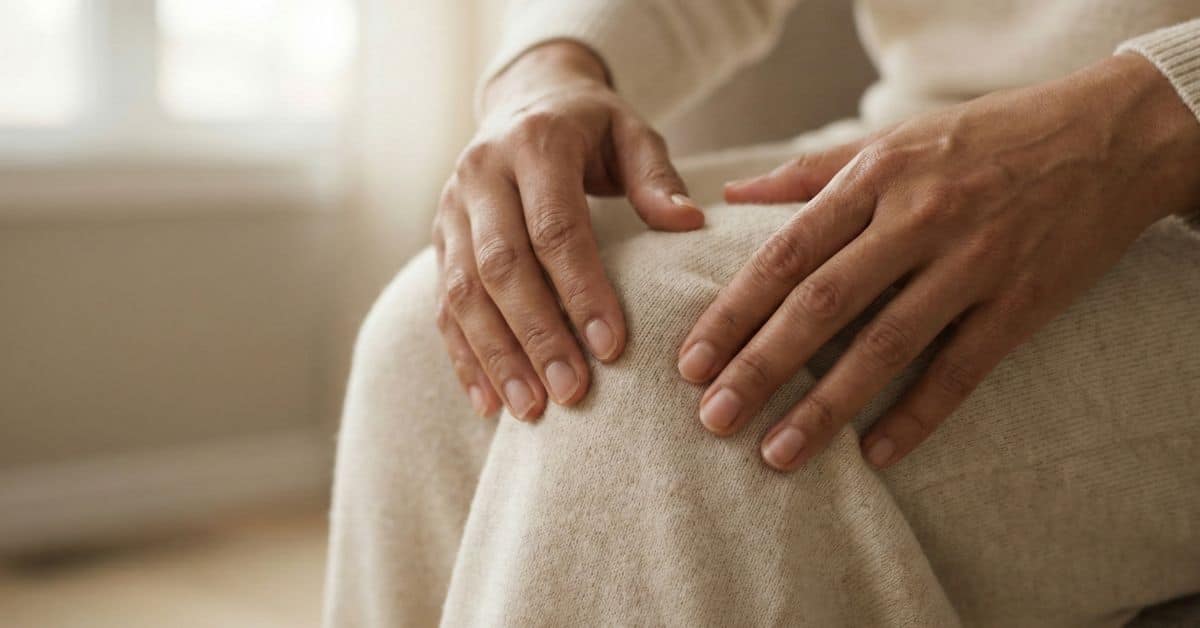
2. Grounding Through Physical Pressure
Physical pressure helps anchor the body in the present.
Try this:
- Press your feet firmly into the floor
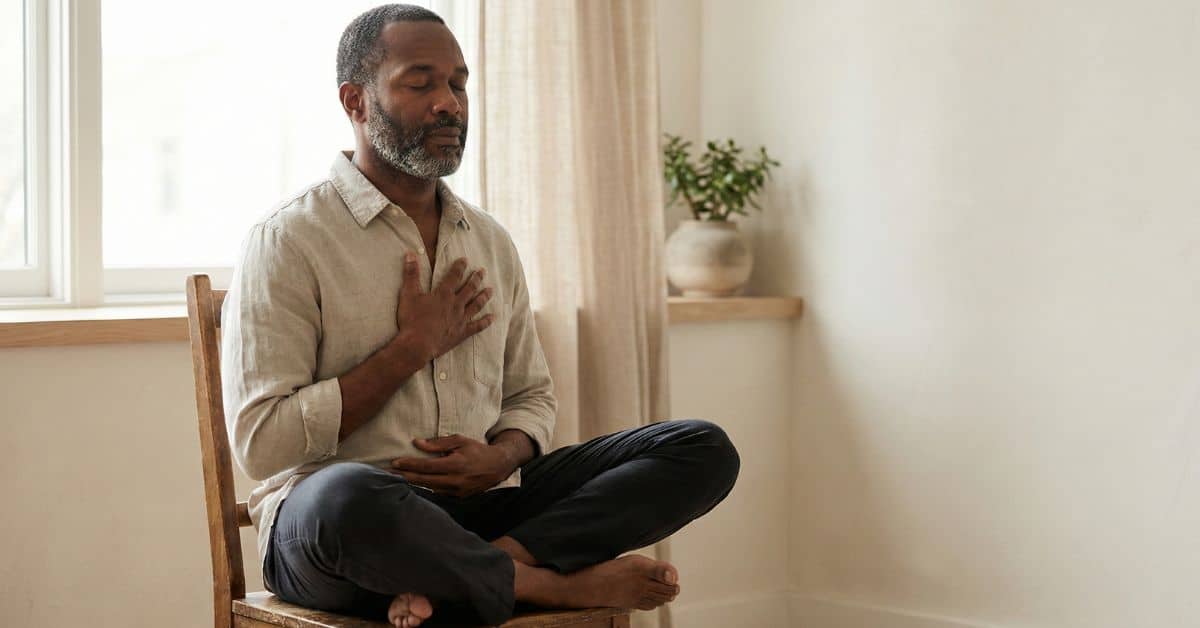
- Gently hug a pillow or place a hand on your chest
- Apply slow, steady pressure
Why it works: Pressure cues the nervous system that the body is supported.
3. Orienting to Your Environment
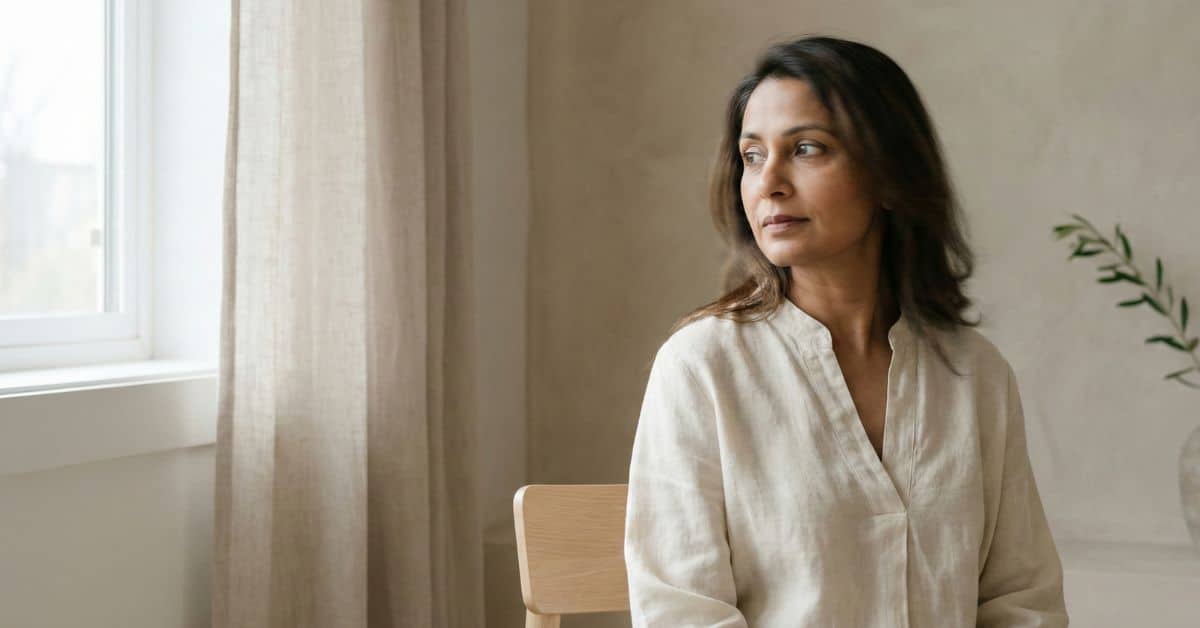
Anxiety narrows perception. Orientation widens it.
How to do it:
- Slowly look around
- Name 3 things you can see
- 2 things you can hear
- 1 thing you can physically touch
Why it works: This tells the brain there is no immediate danger.
4. Gentle Movement to Release Stress Hormones
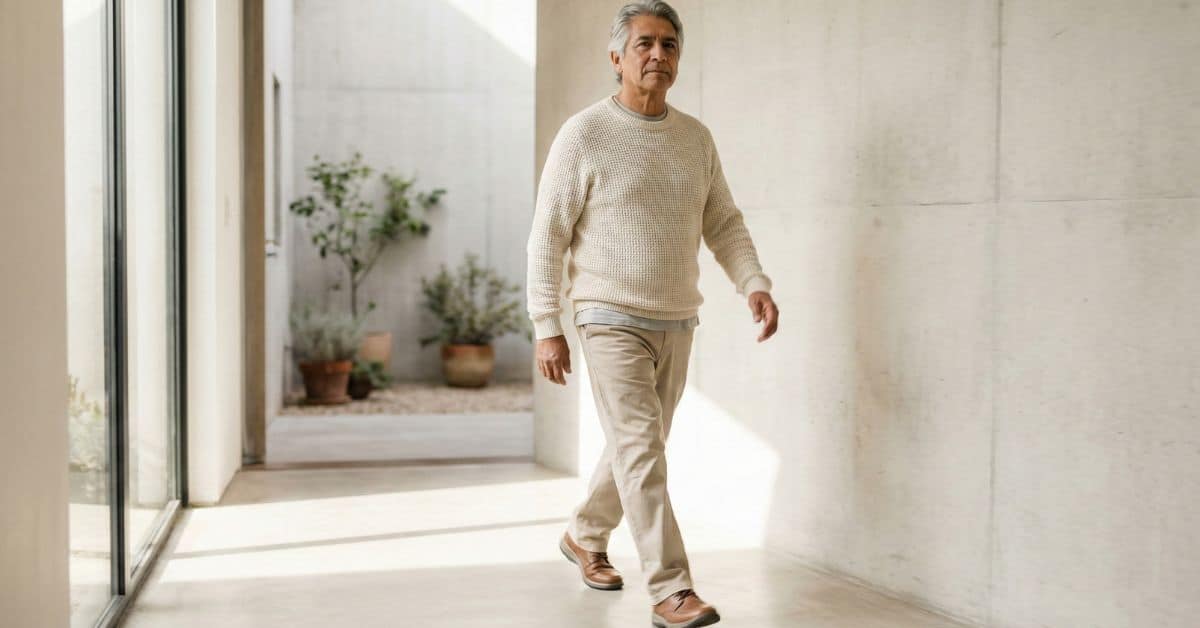
Stillness isn’t always calming.
Try:
- Slow walking
- Gentle stretching
- Rocking side to side
Why it works: Movement helps metabolize stress hormones like adrenaline.
5. Temperature-Based Reset
Temperature changes can interrupt anxiety loops.
Options:
- Splash cool water on your face
- Hold a cold drink
- Step into fresh air
Why it works: Sensory contrast shifts nervous system focus.
What Not to Do During Acute Anxiety
Some well-meaning actions can worsen anxiety:
- Forcing deep breaths aggressively
- Replaying catastrophic thoughts
- Consuming excess caffeine
- Searching symptoms obsessively
Instead, focus on body-first regulation.
When Anxiety Keeps Returning
If anxiety calms but returns frequently, the issue may not be the moment—it may be the baseline.
A nervous system under constant load needs regular downshifting, not just emergency relief.
This is where daily regulation practices become essential. Even 5 minutes a day can retrain your stress response over time.
You can explore this approach further in our guide on nervous system regulation exercises.
A Simple Anxiety Emergency Framework
When anxiety hits, remember this sequence:
- Breathe – slow the exhale
- Ground – apply physical pressure
- Orient – widen perception
- Move – release excess energy
This framework works because it mirrors how the nervous system naturally returns to safety.
Supporting Your Nervous System Long-Term
Fast relief is important. However, prevention matters too.
Daily habits that reduce anxiety intensity include:
- Consistent sleep timing
- Stable meals and hydration
- Reduced caffeine dependency
- Gentle daily movement
- Mental closure at day’s end
Over time, these habits increase resilience.
When to Consider Professional Support
While these tools help many people, persistent or worsening anxiety deserves professional care.
Self-regulation practices complement therapy or medical guidance—they do not replace them.
Learning how to calm anxiety fast without medication gives you back a sense of control.
You’re not trying to eliminate anxiety—you’re teaching your body that it’s safe again.
With practice, these moments become shorter, less intense, and easier to navigate.
Calm isn’t forced. It’s communicated to the body.