
Medical Disclaimer: This content is for informational purposes only and does not replace professional medical advice. If you’re experiencing severe or persistent symptoms, consult a qualified healthcare provider.

Introduction
You know something feels off, but you can’t quite name it.
You’re constantly tired—yet your mind won’t stop racing. Small frustrations feel overwhelming. You lie down exhausted but can’t relax. Even when nothing is objectively wrong, your body feels tense, alert, ready for something to go wrong.
This isn’t weakness. It’s not all in your head. And you’re not imagining it.
What you’re experiencing are signs of a dysregulated nervous system—a state where your body has become stuck in survival mode, unable to smoothly shift between activation and recovery.
Here’s what most people don’t realize: stress isn’t just a mental experience. It’s a full-body response involving your brain, hormones, immune system, and digestive system—all coordinated by your nervous system. When this system becomes overwhelmed for extended periods, it can lose its ability to regulate itself.
The result? A wide range of symptoms that often seem unrelated but share the same root cause.
In this article, you’ll learn:
- The most common signs your nervous system is dysregulated
- Why modern life creates these patterns
- Practical ways to start restoring balance naturally
- When to seek professional support
What Does Nervous System Dysregulation Actually Mean?
Before identifying the signs, it helps to understand how the system works—and what happens when it doesn’t.
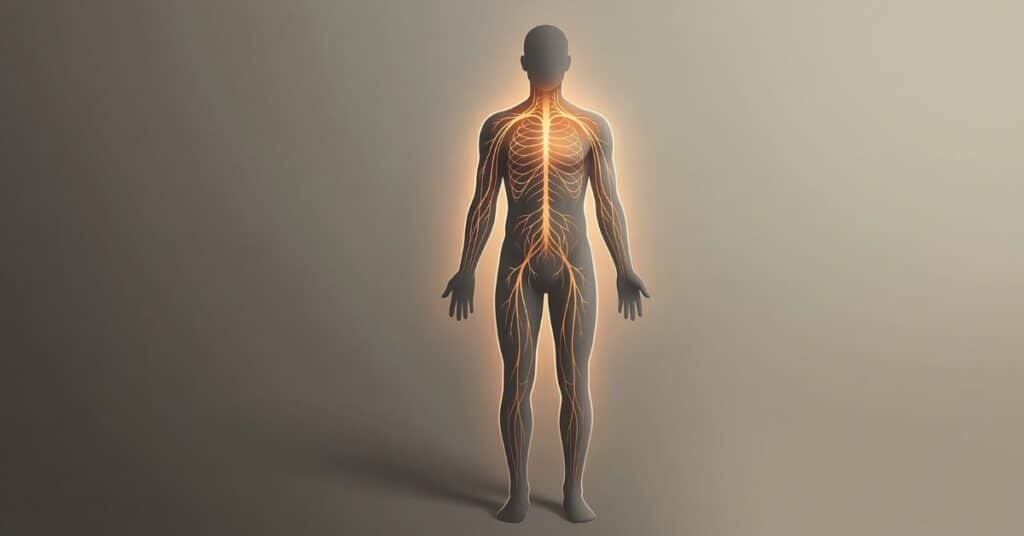
Your autonomic nervous system controls most automatic processes in your body: heart rate, digestion, breathing, temperature regulation, and more. You don’t consciously control these functions—your nervous system handles them based on perceived safety or threat.
It operates through two main branches:
The Sympathetic Nervous System (Activation)
This is your body’s mobilization system—often called “fight-or-flight.”
When activated, it:
- Increases heart rate
- Releases stress hormones (cortisol, adrenaline)
- Sharpens focus and attention
- Mobilizes energy for quick action
- Temporarily suppresses digestion and recovery
This response is incredibly useful when facing real threats or demanding tasks. However, modern life keeps many people in chronic sympathetic activation—constantly responding to deadlines, notifications, emotional stress, and sleep deprivation.
Over time, the body struggles to return to calm.
The Parasympathetic Nervous System (Recovery)
This is your rest-and-digest mode.
When activated, it:
- Slows heart rate
- Supports digestion and nutrient absorption
- Promotes cellular recovery
- Prepares the body for sleep
- Reduces stress hormone production
A healthy nervous system moves fluidly between these states throughout the day—activating when needed, recovering when safe.
Dysregulation occurs when the system gets stuck in one mode—usually sympathetic activation—even when there’s no immediate threat. The body remains on high alert, scanning for problems, unable to fully rest.
This explains why many people feel simultaneously wired and exhausted.
If racing thoughts at night are familiar to you, our guide on why your brain won’t turn off at night explores this specific pattern in depth.
7 Signs Your Nervous System Is Dysregulated
The symptoms of nervous system dysregulation are often subtle at first. However, recognizing them early can help you intervene before chronic stress patterns fully develop.
1. Your Mind Never Fully Slows Down
One of the clearest signs is persistent mental activity that doesn’t respond to normal rest.
Your brain constantly:
- Scans for potential problems
- Replays past conversations
- Anticipates future issues
- Analyzes small details obsessively
This state is called hypervigilance—your brain treats every moment like a potential threat, even during supposedly relaxing activities.
Many people notice this pattern most intensely at night when external distractions disappear. Instead of winding down, the mind speeds up. Our article on overthinking and anxiety addresses this specific experience.
2. You Feel Exhausted but Unable to Relax
This might be the most frustrating symptom: being completely drained yet unable to unwind.
Even when you have time to rest, your body feels:
- Tense or jittery
- Restless or agitated
- Alert despite exhaustion
This happens because stress hormones remain elevated, preventing the shift into recovery mode. People often describe this state as “wired but tired”—a hallmark of sympathetic dominance.
Your body is running on fumes, but the engine won’t turn off.
3. Small Problems Trigger Strong Emotional Reactions
When your nervous system is dysregulated, emotional responses become amplified.
Minor frustrations that you’d normally handle feel overwhelming:
- Traffic delays spark intense irritation
- Small mistakes feel catastrophic
- Normal disagreements escalate quickly
- Simple decisions feel paralyzing
This isn’t about being “too sensitive.” It’s about a threat-detection system that’s become overly reactive. The nervous system interprets minor stressors as significant threats, triggering disproportionate responses.
If you find yourself needing quick relief in these moments, our guide on how to calm anxiety fast without medication offers practical in-the-moment strategies.
4. You Experience Brain Fog and Mental Fatigue
A dysregulated nervous system directly affects cognitive function.
When your brain constantly prioritizes survival signals, fewer resources remain available for:
- Focus and concentration
- Memory formation and recall
- Complex decision-making
- Creative thinking
Common symptoms include:
- Difficulty finishing tasks
- Forgetting why you walked into a room
- Reading the same paragraph multiple times
- Reduced motivation and mental stamina
Brain fog is often connected to stress and energy imbalance—not lack of intelligence or discipline. If you’re also noticing physical energy issues, our article on mental energy vs physical energy explores this distinction.
5. Sleep Becomes Irregular or Non-Restorative
Sleep disruption is one of the strongest indicators of nervous system imbalance.
Common patterns include:
- Difficulty falling asleep despite exhaustion
- Waking multiple times during the night
- Racing thoughts before bed
- Waking up feeling unrested
These patterns appear when the nervous system remains in activation mode late into the evening. Your body needs parasympathetic dominance to initiate and maintain deep sleep—but if the system is stuck in sympathetic mode, sleep quality suffers.
For specific strategies, see our guide on 5-minute anxiety reset exercises that can be used before bed.
6. Digestive Issues Appear or Worsen During Stress
Your digestive system and nervous system are intimately connected through the gut-brain axis.
When the body perceives threat, it temporarily deprioritizes digestion—blood flow redirects to muscles, and digestive processes slow or become erratic.
Over time, chronic nervous system activation can lead to:
- Stomach discomfort or cramping
- Bloating and gas
- Irregular digestion
- Changes in appetite (increased or decreased)
- Food sensitivities that seem to appear suddenly
Research consistently shows that gut health and mental health influence each other bidirectionally. Our article on the fiber-gut-mood connection explores this relationship in greater detail.
7. You Struggle to Feel Fully Present or Relaxed
Many people with nervous system dysregulation describe an interesting phenomenon:
Even during vacations, days off, or calm moments, they still feel tense—unable to fully let their guard down.
This occurs because the nervous system has adapted to constant stimulation and alertness. Without intentional regulation practices, it may take hours—or even days—for the body to begin relaxing.
You might notice:
- Feeling guilty or anxious when not being productive
- Difficulty enjoying activities you used to love
- A constant sense of “waiting for the other shoe to drop”
- Physical tension that doesn’t respond to typical relaxation
This is one of the clearest signs that regulation isn’t happening automatically anymore.
Why Modern Life Dysregulates the Nervous System
Humans evolved in environments where stress occurred in short, intense bursts.
A threat would appear → the body would activate → the threat would pass → recovery would follow naturally.
Modern stress is fundamentally different. Instead of brief episodes, we experience continuous low-grade activation without clear resolution.
Common triggers include:
Constant digital stimulation — notifications, emails, news cycles, social media comparisons all signal the brain to stay alert.
Irregular sleep schedules — inconsistent sleep disrupts the body’s natural circadian rhythm, which regulates stress hormone production.
Information overload — processing vast amounts of information daily keeps the brain in analytical mode without breaks.
High caffeine intake — caffeine mimics stress hormones, keeping the system activated even when you want to rest.
Emotional stress without physical release — unlike our ancestors who ran from threats, we sit still while mentally stressed, leaving stress hormones circulating without physical discharge.
Over time, the nervous system adapts by remaining chronically alert—interpreting this state as the new normal.
How to Start Resetting Your Nervous System
The encouraging news: the nervous system is highly adaptable. With consistent signals of safety and recovery, it can gradually relearn regulation.
Here are practical strategies to begin.

1. Practice Simple Breathing Techniques
Breathing is one of the fastest ways to directly influence nervous system state.
Slow, controlled breathing activates the parasympathetic response through the vagus nerve.
Box Breathing (4-4-4-4):
- Inhale for 4 counts
- Hold for 4 counts
- Exhale for 4 counts
- Hold for 4 counts
- Repeat for 3-5 minutes
Repeating this cycle signals the body that it’s safe to downregulate. Our comprehensive guide on breathwork for mental clarity covers several additional science-backed techniques.
2. Reduce Constant Stimulation
Your nervous system needs periods of low sensory input to reset.
Try introducing small breaks throughout your day:
- Brief walks without your phone
- Quiet moments without screens or music
- Time outdoors in natural settings
- Eating one meal in silence
These pauses help signal to the brain that the environment is safe—that constant vigilance isn’t necessary.
3. Move Your Body Regularly
Physical movement helps metabolize accumulated stress hormones and complete the stress cycle.
Effective options include:
- Walking (especially in nature)
- Gentle stretching or yoga
- Dancing or shaking movements
- Light strength training
Even 10 minutes of intentional movement can significantly shift nervous system state. The key is consistency rather than intensity.
4. Improve Your Sleep Environment
Sleep is one of the most powerful nervous system regulators available.
Simple adjustments that support parasympathetic activation:
- Dim lights 1-2 hours before bed
- Reduce screen exposure in the evening
- Maintain a consistent sleep schedule (even on weekends)
- Keep your bedroom cool and dark
These habits help restore your natural circadian rhythm, which regulates cortisol production throughout the day.
5. Use Structured Daily Practices
Consistency is one of the most important factors in nervous system regulation.
Small practices repeated daily gradually retrain the body to return to balance. This is exactly the approach used in the 30 Day Challenge – Transform Your Anxiety Into Inner Peace, which introduces simple daily exercises specifically designed to retrain stress responses and rebuild regulation capacity.
The challenge combines breathwork, grounding techniques, and nervous system resets into a progressive structure—making it easier to stay consistent rather than trying to remember scattered techniques.
For additional quick practices, see our article on nervous system regulation exercises.
Frequently Asked Questions
How do I know if my nervous system is dysregulated or if I just have anxiety?
Nervous system dysregulation is often the physiological foundation beneath anxiety symptoms. Anxiety is the psychological experience (racing thoughts, worry, fear), while dysregulation is the underlying state (sympathetic dominance, inability to calm). Many people have both—addressing nervous system regulation often reduces anxiety intensity significantly.
Can a dysregulated nervous system fix itself?
The nervous system can absolutely restore regulation, but it rarely happens without intentional intervention. Simply hoping it will fix itself while continuing high-stress patterns typically doesn’t work. However, with consistent regulation practices—breathing, movement, sleep, reducing stimulation—most people notice meaningful improvement within 2-4 weeks.
How long does it take to reset a dysregulated nervous system?
Initial improvements (better sleep, reduced reactivity) often appear within 1-2 weeks of consistent practice. Deeper regulation—where the nervous system returns to flexibility and resilience—typically takes 4-8 weeks of daily practice. Think of it like physical fitness: early gains come quickly, but lasting change requires sustained effort.
When to Seek Professional Help
While many symptoms of nervous system dysregulation improve with lifestyle adjustments, persistent or severe symptoms may require professional guidance.
Consider speaking with a healthcare provider if you experience:
- Severe anxiety or panic attacks
- Long-term insomnia (more than a few weeks)
- Chronic fatigue that doesn’t improve with rest
- Significant mood changes or depression
- Physical symptoms that interfere with daily functioning
These conditions can sometimes involve deeper physiological or psychological factors that benefit from professional assessment and treatment.
Conclusion
Your nervous system plays a central role in how you experience the world—affecting everything from sleep and digestion to focus and emotional stability.
When it becomes dysregulated, the effects ripple across multiple areas of life. But here’s the encouraging truth: regulation can be relearned.
By gradually introducing signals of safety, recovery, and stability—through breathing, movement, sleep, and reduced stimulation—your body can shift out of chronic stress and return to a healthier rhythm.
Small daily practices often create the biggest long-term changes. Start with one technique. Practice it consistently. Notice what shifts.
Your nervous system is waiting for the signal that it’s safe to rest.
Healing isn’t about perfection. It’s about showing up consistently with practices that support regulation.
You might also find helpful:
- Nervous System Regulation Exercises: Simple Ways to Feel Calmer and More Balanced
- Overthinking and Anxiety: Why Your Brain Won’t Turn Off (And How to Help It)
- 5-Minute Anxiety Reset Exercises You Can Do Anywhere
- How to Calm Anxiety Fast Without Medication
- Breathwork for Mental Clarity: Science, Techniques, and Daily Practice
Ready to start rebuilding regulation? The 30 Day Challenge guides you through a progressive system of daily practices designed to restore nervous system balance and transform anxiety into lasting calm.
Scientific Context:
While this article focuses on practical application, the underlying science is well-established. Research in polyvagal theory, stress physiology, and psychoneuroimmunology has demonstrated the bidirectional relationship between nervous system state and mental/physical health. Key researchers in this field include Dr. Stephen Porges (polyvagal theory), Dr. Robert Sapolsky (stress physiology), and Dr. Bessel van der Kolk (trauma and nervous system regulation).