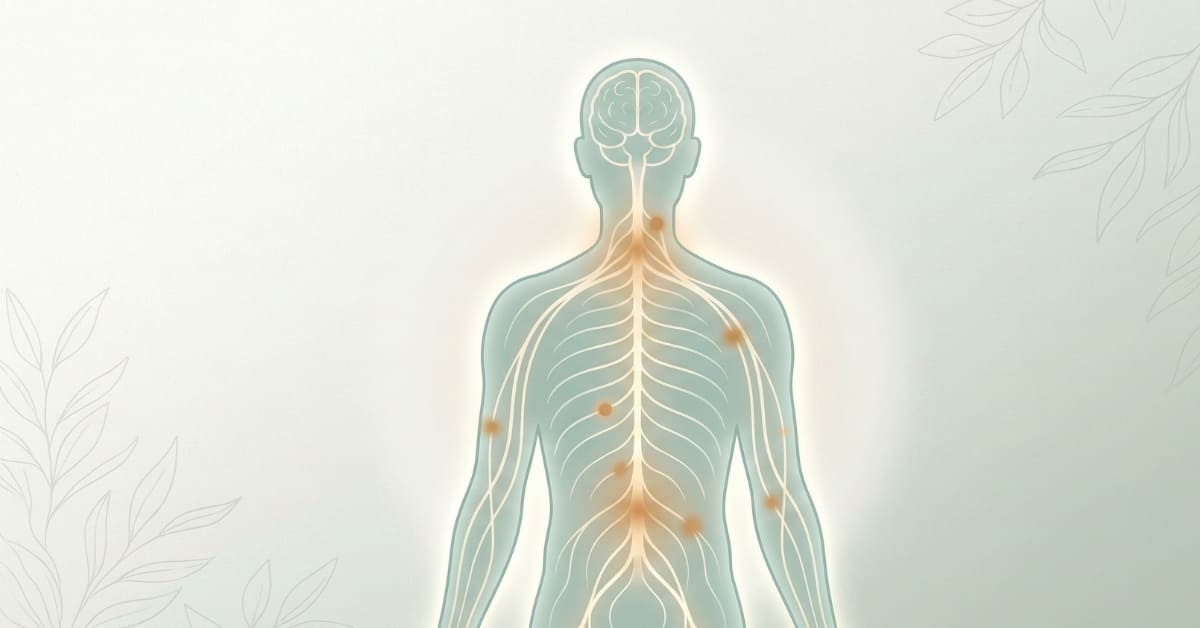
Signs Your Nervous System Is Dysregulated (And What Actually Helps)

The signs your nervous system is dysregulated often show up quietly—long before you label them as anxiety, burnout, or stress.

You might feel constantly tense, emotionally reactive, mentally exhausted, or unable to fully relax even when nothing is “wrong.” These experiences can be confusing, especially when medical tests come back normal.

A dysregulated nervous system doesn’t mean you’re broken. It means your body has been stuck in protection mode for too long.

In this article, you’ll learn:

  • The most common signs of nervous system dysregulation
  • Why these symptoms happen
  • What actually helps your body return to balance
Subtle symptoms often signal nervous system overload.

What Does It Mean to Have a Dysregulated Nervous System?

Your nervous system is designed to move between activation and recovery.

When stress is temporary, this system works beautifully. But when stress becomes chronic—emotional, mental, or physical—the nervous system can get stuck in a state of heightened alert.

This state is often referred to as nervous system dysregulation. It’s not a diagnosis, but a pattern where the body struggles to downshift into rest.

Over time, this affects mood, sleep, digestion, focus, and energy.

For a deeper explanation of how regulation works, see our guide on nervous system regulation exercises.

Chronic stress can keep the body in protection mode.

Common Signs Your Nervous System Is Dysregulated

Not everyone experiences dysregulation the same way. Below are some of the most common patterns.

1. You Feel Tired but Can’t Fully Relax

Even during downtime, your body feels “on edge.” Rest doesn’t feel restorative.

Why it happens: The nervous system stays partially activated, preventing deep recovery.

2. Racing Thoughts or Mental Noise

Your mind jumps from thought to thought, especially at night.

This overlaps with sleep disruption and overthinking patterns often explored in articles like why my brain won’t turn off at night.

3. Heightened Emotional Reactivity

Small stressors trigger outsized emotional responses.

Why it happens: When the nervous system is overloaded, emotional regulation becomes harder.

4. Physical Tension Without Clear Cause

Common areas include jaw, neck, shoulders, or chest.

This tension is a physical signal of sustained stress activation.

Unexplained tension is a common stress response.

5. Digestive Discomfort During Stress

Bloating, nausea, or appetite changes appear when you’re overwhelmed.

The gut and nervous system are closely linked through the gut-brain axis.

6. Sensitivity to Noise, Light, or Stimulation

Crowds, bright lights, or multitasking feel overwhelming.

Why it happens: A sensitized nervous system processes input as potential threat.

Heightened sensitivity reflects nervous system overload.

7. Sleep Feels Light or Fragmented

You fall asleep but wake easily or feel unrested.

Sleep quality depends heavily on nervous system downregulation.

Why These Signs Are Often Misinterpreted

Many people interpret these symptoms as:

  • Weak stress tolerance
  • Personality flaws
  • Lack of discipline

In reality, these are physiological patterns, not character issues.

Understanding this distinction is often the first step toward healing.

What Actually Helps a Dysregulated Nervous System

Trying to “think your way out” of dysregulation rarely works. The nervous system responds best to bottom-up signals.

Focus on Regulation, Not Suppression

Helpful approaches include:

  • Breathing patterns with longer exhales
  • Gentle, rhythmic movement
  • Grounding through the senses
  • Consistent daily routines

These strategies are explored in more detail in our guide to nervous system regulation exercises.

A Simple Daily Framework

You don’t need to do everything at once.

Try this gentle structure:

  • Morning: brief breathing or light exposure
  • Midday: grounding or movement break
  • Evening: slow breathing or stretching

Consistency teaches the body that it’s safe to shift into recovery.

Simple daily routines support nervous system balance.

When to Seek Extra Support

If symptoms are intense or worsening, professional support is important.

Regulation practices can complement therapy or medical care—but they don’t replace it.

The signs your nervous system is dysregulated are not a failure—they’re messages.

When you learn to listen and respond with the right signals, your body can relearn calm.

Start small. Choose one practice. Let your nervous system catch up.

Healing begins when the body feels safe again.

Rolar para cima